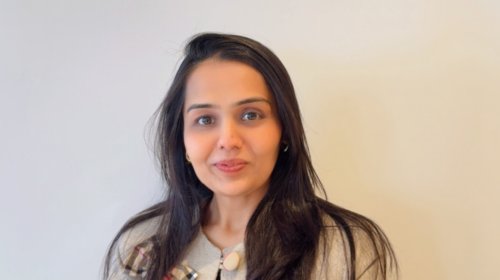
At Brilliant Read Media, it is our constant endeavour to identify and share some of the unique and compelling stories from the startup ecosystem. As part of this, we invited Kavitta Mehtta for an interview with Brilliant Read Media. To say it further, Kavitta is an Author, Global Education Expert and Founder & CEO at 3RDiConsulting. Let’s learn more about her background, inspiring journey so far and her advice for our growing community!
Excerpts from our exclusive interview with Kavitta:
With over 15 years of experience and having guided more than 10,000 students, what inspired you to enter the field of career counselling and global education?
My journey into career counselling began with my own experience as an international student. While pursuing my Master’s degree abroad, I realised that choosing a university wasn’t simply about completing applications; it was one of the most significant life decisions a young person would make. Despite having access to abundant information, I found that students often lacked personalised guidance.
When I returned to India, I noticed the same challenge. Many students were making career decisions based on hearsay, rankings, or peer influence, while parents often felt equally overwhelmed. That inspired me to establish 3RDiConsulting with a simple philosophy: every student deserves guidance that is personalised, ethical, and future-focused.
What continues to motivate me isn’t the number of admissions we’ve secured; it’s seeing students discover careers they genuinely enjoy, watching parents gain confidence in their children’s choices, and hearing from alumni years later who tell me they are happy with the decisions they made. Those conversations remind me why I started this journey.
You believe there is no one-size-fits-all approach to education. How does 3RDiConsulting create a personalised roadmap based on a student’s aptitude, academic profile, budget, and long-term career aspirations?
Every student who walks into our office has a unique story, which is why offering the same solution to everyone would never make sense.
Our counselling process begins by understanding the student before discussing universities. We take time to learn about their interests, strengths, personality, academic background, aspirations, and even family expectations. We also have honest conversations about budgets, lifestyle preferences, and long-term career goals because all these factors influence the right educational pathway.
Using career mapping, psychometric assessments where appropriate, detailed profile evaluations, and continuous mentoring, we create a roadmap that evolves with the student rather than being a one-time recommendation.
Interestingly, some of our most valuable advice involves encouraging students not to apply to the most popular university. Sometimes we recommend destinations they had never considered or courses they didn’t even know existed. Success, for us, isn’t about prestigious admissions; it’s about helping students find the right fit where they can grow, succeed, and build meaningful careers.
Many students feel pressured to choose careers based on trends, peer influence, or parental expectations. How can career mapping and psychometric assessments help them make more informed and confident decisions?
One of the biggest misconceptions today is that if a career is trending, it’s automatically the right choice for everyone. We’ve seen this happen repeatedly with engineering, medicine, data science, artificial intelligence, finance, and many other fields.
Career mapping encourages students to step away from external noise and focus on understanding themselves. Psychometric assessments offer scientific insights into their interests, personality, strengths, and work preferences. While these assessments don’t determine a student’s future, they provide an excellent foundation for meaningful conversations.
I often remind students that choosing a career isn’t a four-year decision; it’s a forty-year decision. It deserves careful thought rather than being influenced by friends or social media.
When students first understand who they are before deciding what they want to become, they make choices with far greater confidence and resilience because those decisions genuinely align with their personalities and aspirations.
Study-abroad aspirants often focus primarily on university rankings. What other factors should students consider when selecting the right course, university, and country?
This is one of the most common discussions I have with families.
University rankings certainly have value, but they should never be the sole deciding factor. Students should also evaluate curriculum flexibility, internship opportunities, graduate employability, industry partnerships, faculty expertise, location, affordability, scholarship opportunities, visa policies, and post-study work options.
Another equally important consideration is finding the right fit. A university that’s perfect for one student may not necessarily be ideal for another.
I also encourage students to think beyond the next three or four years. Ask yourself: Where do I want to work after graduation? Which industries are growing? Which countries provide stronger opportunities in my chosen field? What kind of learning environment suits my personality?
The objective shouldn’t simply be attending the highest-ranked university it should be attending the university that offers the best opportunity to build the life and career you envision.
Having guided students across destinations such as the UK, USA, Canada, Australia, Europe, Singapore, Dubai, Hong Kong, and New Zealand, what major shifts are you witnessing in global education and student preferences?
One of the biggest shifts is that students have become far more outcome-focused than destination-focused.
A few years ago, discussions revolved around which country was the most popular. Today, students ask much better questions about return on investment, employment opportunities, immigration pathways, industry exposure, and long-term career prospects.
We’re also seeing increasing interest in emerging destinations such as Europe, Singapore, and Dubai because students are seeking specialised programmes, affordability, and global exposure.
Artificial intelligence has significantly influenced educational choices as well. Students increasingly prefer programmes that integrate technology with traditional disciplines like finance, healthcare, law, marketing, and engineering. Interdisciplinary education is becoming increasingly valuable.
Perhaps the most encouraging shift is that families are beginning to understand that success isn’t defined by a single country or university; it’s defined by choosing the pathway that’s right for the individual.
Your book, Confused to Capable, draws from the real struggles and successes of students. What inspired you to write it, and what key message do you hope students, parents, and educators take away from it?
Over the years, I realised that students weren’t struggling because they lacked talent; they were struggling because they lacked clarity.
Almost every counselling session revolved around similar questions: What should I study? Am I making the right choice? What if I disappoint my parents? What if I fail?
I wanted to write a book that addressed these concerns honestly and practically. Confused to Capable isn’t merely about choosing a college; it’s about helping young people understand themselves before making life-changing decisions.
If readers take away one message, I hope it’s this: You don’t have to have everything figured out at sixteen or seventeen. What truly matters is asking the right questions, seeking the right guidance, and making informed decisions instead of rushed ones.
I also hope parents remember that every child has a unique definition of success. Supporting that individuality often leads to the happiest and most fulfilling careers.
As artificial intelligence and emerging technologies continue to reshape industries, how should students prepare for careers that may look very different in the next decade?
I often say that AI isn’t replacing students; it’s replacing students who refuse to adapt.
Technology will continue to evolve, but qualities such as curiosity, communication, creativity, critical thinking, leadership, and emotional intelligence will become even more valuable.
Students should certainly learn how to leverage AI effectively, but they must also develop skills that technology cannot easily replicate. Practical experiences such as internships, research, entrepreneurship, volunteering, and collaborative projects will distinguish candidates far more than simply having excellent academic scores.
Ultimately, the future belongs to lifelong learners. Students who remain curious, adaptable, and committed to continuous learning will always stay ahead, regardless of how industries evolve.
Looking ahead, what is your long-term vision for 3RDiConsulting, and how do you hope to transform the way students approach career planning and global education?
My vision has always extended far beyond helping students secure university admissions.
I believe career guidance should become an integral part of every student’s educational journey, beginning much earlier than Grade 12. Students should start discovering their strengths, exploring career possibilities, and building meaningful experiences while they are still in school.
At 3RDiConsulting, we’re expanding our focus on career mapping, profile building, mentorship, school partnerships, and parent education because informed decisions aren’t made overnight; they develop over time.
Ultimately, I hope we can shift the conversation from “Which college should I choose?” to “What kind of life and career do I want to build?”
If we can help more students make confident, informed, and authentic choices instead of simply following the crowd, I believe we will have truly fulfilled our purpose.
At BrilliantRead, we don’t just share startup stories; we bring you journeys that challenge perspectives, spark ideas, and fuel ambition. Every story we feature is carefully chosen to add real value, inspire action, and ignite possibility within our growing community of entrepreneurs and dreamers.
If you have a powerful story, one that can inspire, educate, or create impact we want to hear from you.